The Salary Negotiation Script That Works
Most engineers leave $20–60K on the table over the course of a job change because they don't negotiate, or they negotiate poorly. Here's the exact script we coach inside PathWand career coaching.
March 2, 2026 · 6 mins
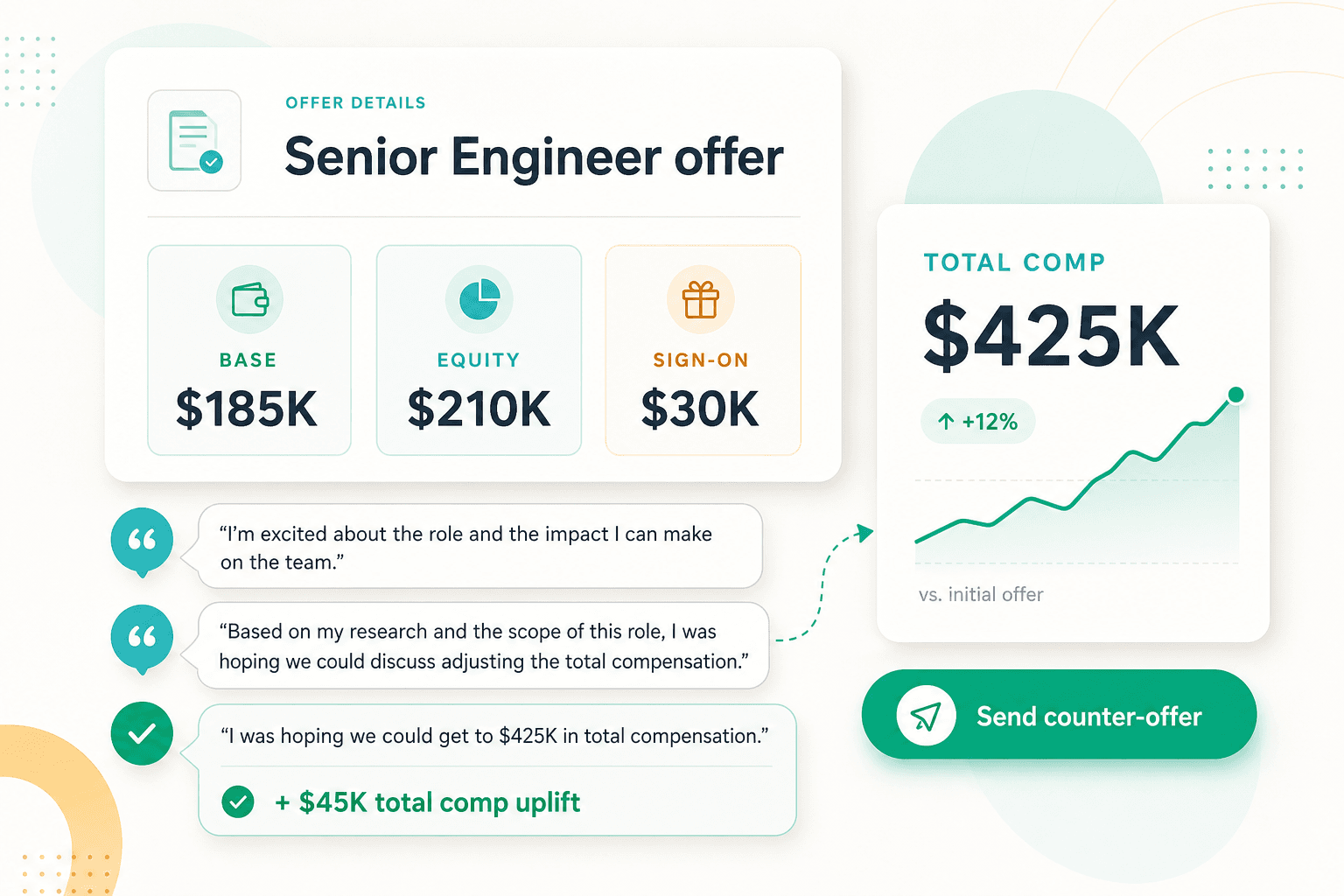
You're already negotiating — you just don't know it yet
Most engineers think of "negotiation" as the back-and-forth that starts after the offer letter arrives. It doesn't. The negotiation starts with the first recruiter screen.
Every time you say a number — even a "budget," even a "ballpark" — you're setting the anchor that the rest of the process will reference. Get that one moment right and the rest is mostly mechanics.
Here's the script we coach inside PathWand career coaching, end-to-end.
Move 1 · The recruiter screen number question
Recruiter: "What kind of compensation are you targeting?"
Bad: "I'm flexible — what's the budget?"
Good: "I want to make sure we're aligned on the role first. Could you share the band you have for this level?"
The point is to make the recruiter share the number first. They have one; they're allowed to share it; and if they push back ("we like to start with the candidate"), you can simply say:
"Got it. Based on what I've seen in the market for senior frontend engineers in the US, I'm targeting somewhere in the $180–220K base range. Does that fit your band?"
You've now anchored at the top of the band you're realistically targeting. You haven't committed to a number. And you've moved the conversation from "what's the minimum I'd accept" to "where does the band stop."
Move 2 · The competing-offer line — even if you don't have one
Recruiters listen differently when there's competition. You don't always have a real competing offer, but you almost always have real options — other interview loops, current job, other companies you've started talking to.
"I'm in a few other processes right now and I'd like to keep this one moving in parallel. Mind if I share my rough timeline?"
This isn't bluffing. It's stating the truth in a way that the recruiter can use internally. Recruiters often need this language to push their hiring manager to move faster or write a better offer.
Move 3 · When the offer arrives — slow it down
The single biggest mistake at this stage is responding to an offer call in real time.
What to actually say on the offer call:
"Thank you so much — I'm really excited about this. I want to take a day to look at the details properly. Can I come back to you tomorrow morning with any questions?"
That's it. Get off the phone. Don't accept, don't counter, don't react. Then you have 24 hours to:
- Read every line of the offer letter
- Compute total comp, year 1, year 2, year 4
- Write your counter
Move 4 · The counter
The shape of a strong counter:
"Hi {name} — thanks again for the offer. After reviewing the details and comparing it against the other processes I'm in, I'd love to align on a few items:
1) Base — could we move from $185K to $205K? This better matches what I've seen for {level} {role} at {peers}.
2) Sign-on — given relocation/transition costs, could we add a $30K sign-on?
3) Equity — could we revisit the grant given the role's leadership scope?
Excited to find a path that works for both sides."
A few rules of this template:
- Three asks, not one. (You'll concede on one, win on two.)
- Every ask has a "because." Recruiters can pass that "because" up to the comp committee verbatim.
- No threats. No "or I'll take the other offer." That's the recruiter's job to fill in.
- Excited, not anxious. This is a partnership, not a hostage negotiation.
Move 5 · The "OK, last one" tactic
When the recruiter comes back with one round of improvements, they'll often say "this is the best we can do." It isn't, usually, but you also can't keep going forever.
What to say once:
"Thank you — this is a strong package. I really want to make this work. Is there any flexibility on {one remaining ask}? If you can move on that, I'm ready to sign."
This is your closer. It signals you're ready to move, and it gives the recruiter a clear win to take to the hiring committee.
Common mistakes that cost five figures
- Accepting on the call ("This sounds great, I'll sign now!")
- Asking for a "raise" instead of a counter (it's not a raise yet — they haven't even hired you)
- Negotiating only base (sign-on and equity are usually more flexible)
- Apologizing for negotiating (recruiters expect it; not negotiating is the surprise)
Want help running this for your offer?
PathWand career coaching offers single-engagement offer prep — we'll script your counter together, role-play the recruiter call, and review the final offer letter. Most candidates leave with $20–60K more than they would have secured alone.
More from PathWand
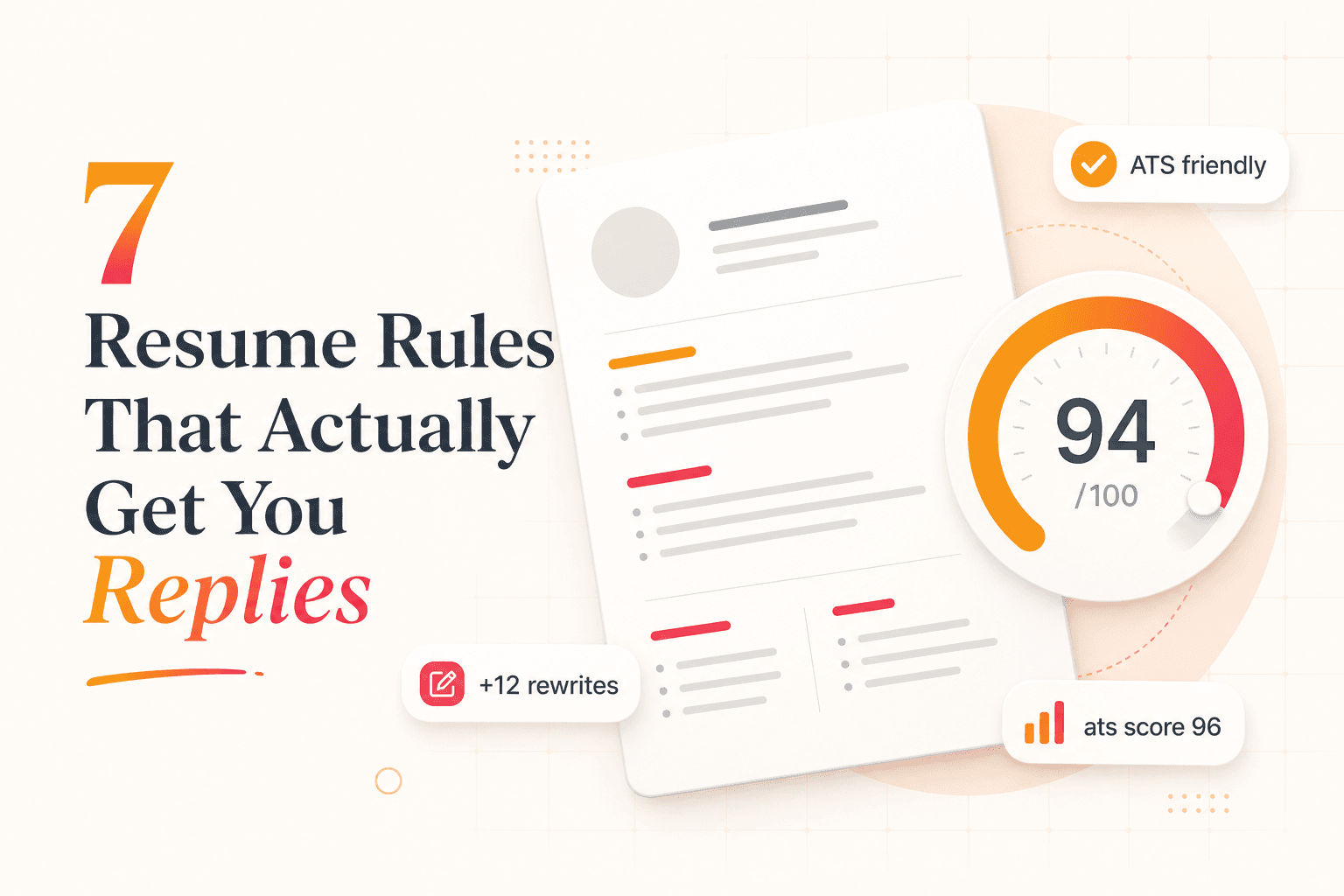
7 Resume Rules That Actually Get You Replies
Recruiters spend an average of 7.4 seconds on a resume. After reviewing thousands of resumes through the PathWand resume review program, we distilled the rules that consistently move candidates from "applied" to "interview" — and the ones you can safely ignore.

The LinkedIn Profile Playbook for Engineers
Most engineering profiles on LinkedIn are technically accurate and emotionally invisible. Here's the PathWand playbook we use to triple recruiter outreach — without performative posts or buzzwords.
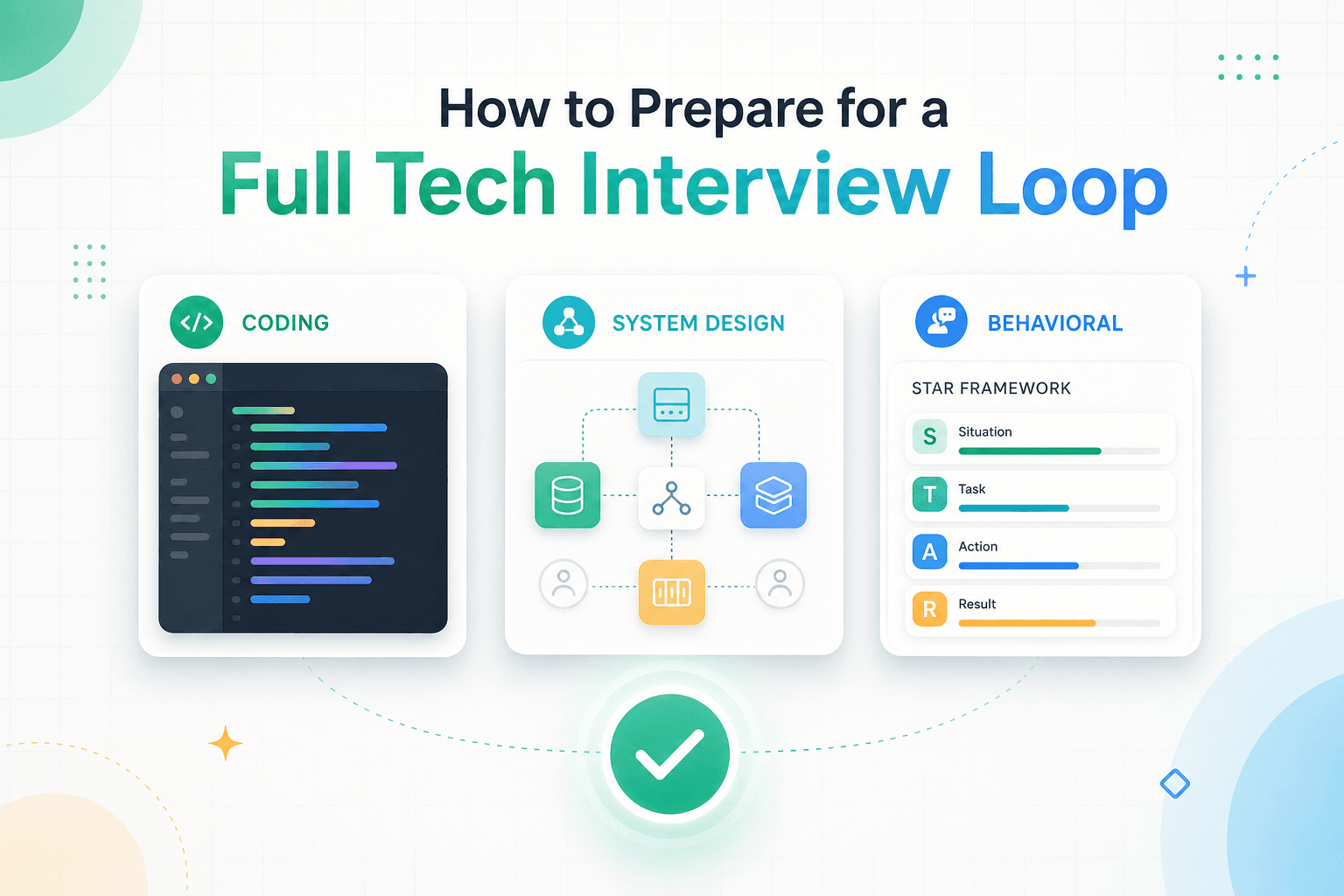
How to Prepare for a Full Tech Interview Loop
A 4-week study plan for full interview loops at product companies — coding, system design, behavioral — built from the same prep we use inside the PathWand Tech Fellowship.