Why Mentorship Compounds Faster Than Courses
Courses give you knowledge. Mentors give you *context* — the unwritten rules, the trade-offs, the warning signs. Here's why one hour a month with a senior engineer often beats six months of self-study.
March 15, 2026 · 5 mins
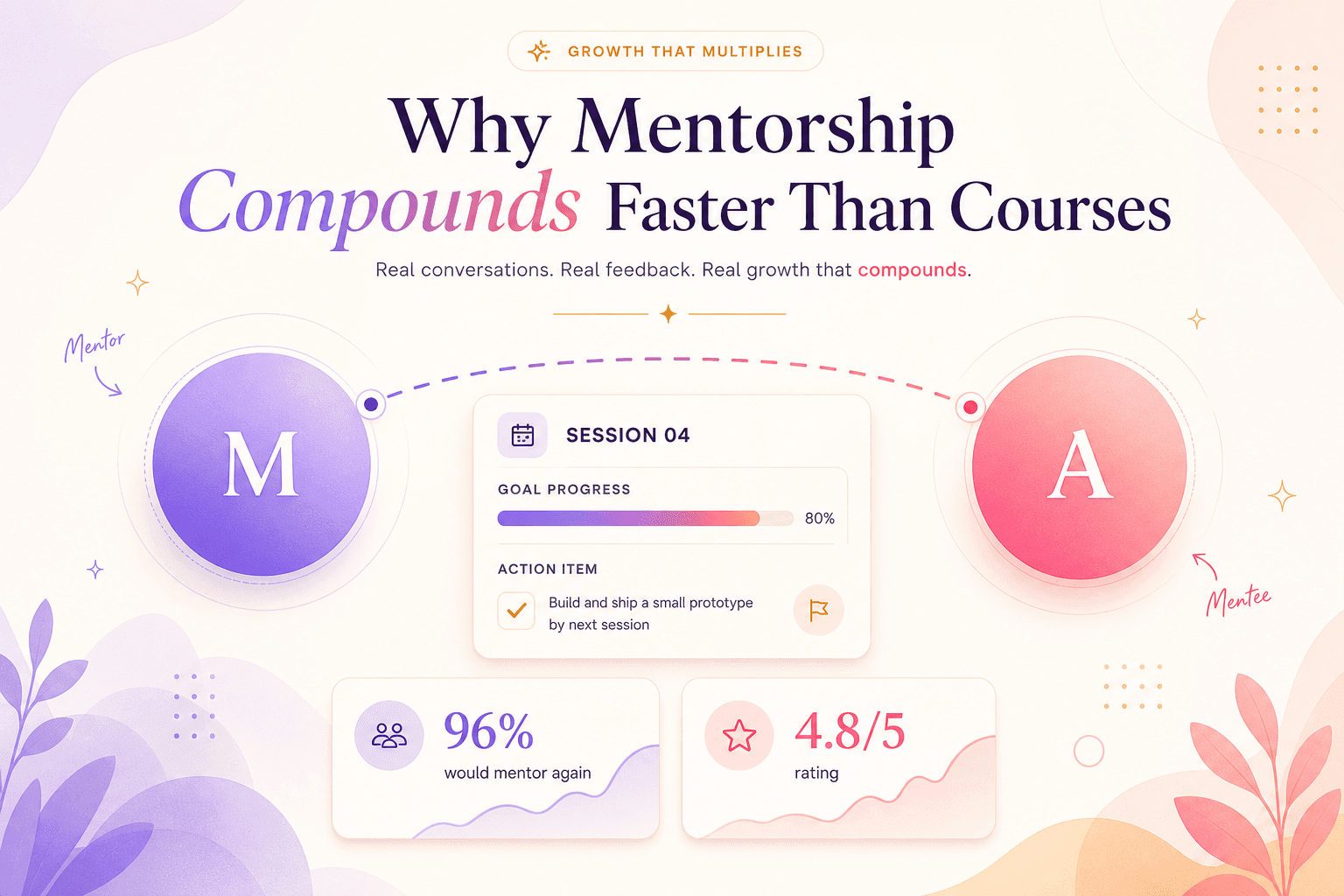
The two kinds of learning
There are two very different kinds of learning a junior engineer can do, and only one of them compounds.
The first is what most people picture: courses, books, tutorials, videos. We'll call this information learning. It's wide, it's accessible, and it's basically free.
The second is much harder to come by: context learning — knowing when to apply what you know, why a thing that worked once won't work again, and what the unwritten rules are at the level of organization you're trying to grow into.
Information learning is what courses are for. Context learning is what mentors are for. And in most engineering careers, context is the multiplier.
What good mentors actually do
After running thousands of mentor-mentee pairings through PathWand, we've noticed a pattern in what good mentors do that's almost the opposite of what their job title suggests.
Good mentors:
- Don't answer your question — they re-ask it. "Why are you optimizing for that?" is more useful than "Yes, index that column."
- Tell you about their failures, not their wins. Wins are inspirational; failures are instructional.
- Give you the rule you can use 12 times, not the answer you can use once.
- Help you draw a wider career map than the one you walked in with.
- Push you toward decisions even when you'd prefer to keep researching.
A good mentor does not write your code, edit your resume, or do your job for you. They change the questions you're asking yourself.
Why one hour a month is enough
Mentees often ask us if 1 hour a month is "really enough." It is — and not by accident.
Mentorship doesn't compound through time-on-task. It compounds through decision quality between sessions. A single 60-minute conversation can rewrite the next four weeks of your work. The hour itself is the smallest part of the value.
Compare this to courses, where the value scales linearly with how much time you put in. A course is a resource. A mentor is a function — they multiply what you do with the rest of your week.
Don't ask for "a mentor"
Asking someone to "be your mentor" is one of the worst openings, and we see it constantly.
Better asks:
- "I'm working through whether to take Role A or Role B. Could I get 30 minutes of your perspective?"
- "I'm trying to grow from senior to staff. Are you open to a 1:1 conversation about how you made that jump?"
- "I just shipped X. I'd love your take on the trade-offs we made."
Ask for a conversation about a question, not a relationship without a shape. Most senior engineers will say yes to the first one and "I'm too busy" to the second.
Becoming a mentor is also how you grow
This is the part most people don't realize: mentoring shortens your own learning curve.
When you have to articulate why you'd choose React Query over SWR, or why you'd ship the migration in three small PRs instead of one big one, you sharpen something in your own thinking. Mentees ask the questions you've stopped asking.
That's why we run a Become-a-Mentor track at PathWand. The mentees get a multiplier; the mentors get a different multiplier.
Want a mentor — or want to be one?
Apply to the PathWand mentor pool. We match on goals, communication style, and pace — and you get a 1-hour intro call to make sure the match feels right before you commit.
Most mentees are matched within a week. Most mentors come back to mentor again within two cycles.
More from PathWand
7 Resume Rules That Actually Get You Replies
Recruiters spend an average of 7.4 seconds on a resume. After reviewing thousands of resumes through the PathWand resume review program, we distilled the rules that consistently move candidates from "applied" to "interview" — and the ones you can safely ignore.
The LinkedIn Profile Playbook for Engineers
Most engineering profiles on LinkedIn are technically accurate and emotionally invisible. Here's the PathWand playbook we use to triple recruiter outreach — without performative posts or buzzwords.
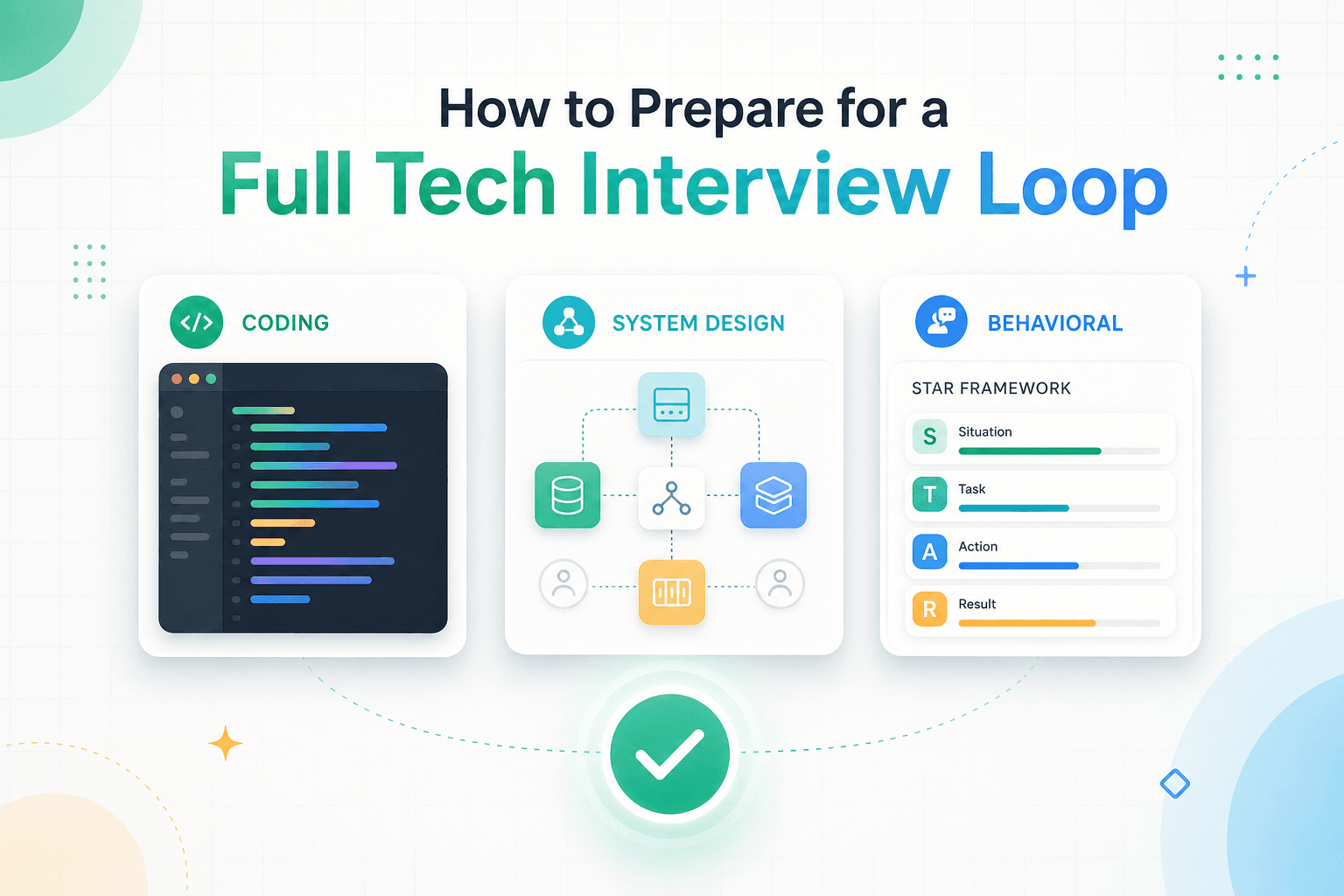
How to Prepare for a Full Tech Interview Loop
A 4-week study plan for full interview loops at product companies — coding, system design, behavioral — built from the same prep we use inside the PathWand Tech Fellowship.